
25 Aug, 2026

“In the real world, something is happening and no one knows what is going to happen. In the image-world, it has happened, and it will forever happen in that way.”
Non-consensual intimate imagery (NCII) abuse is imagery created, distributed or threatened to be disseminated without the subject’s consent.
In The Novelty of ‘Cybercrime’, Criminology Professor Majid Yar (2005) identifies three characteristics of digital environments that can intensify harms occurring within them. First, the collapse of spatial-temporal barriers allows people to be targeted regardless of physical distance. Second, many-to-many connectivity enables content and abuse to reach potentially vast networks. Third, the anonymity and plasticity of online identity can facilitate deception while making perpetrators more difficult to identify and trace.
Hence, the architecture of the digital environment itself enables NCII to endure. Apps with weak moderation practices, at both the platform and user levels, are where this kind of activity tends to fester. Perpetrators often build networks that span multiple platforms, with each platform playing a different role in facilitating the network. One platform may be used as bait, directing users to another where partial content is available, followed by monetization and, ultimately, access to the full content. This interconnected web is intentionally structured to evade detection and moderation.
An image can outlive the moment in which it was created, separate itself from the person depicted, and continue to circulate in ways they can no longer control.
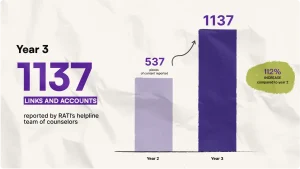
In Year 3 of Meri Trustline, RATI’s helpline team of dedicated counsellors reported 1,137 links and accounts, a substantial increase of approximately 112% compared to Year 2, when 537 pieces of content were reported.
Once an intimate image enters the digital realm, it turns into a swarm. Even when the source image was taken down, a clone, screenshot, crop or altered version would reappear and the case would reopen. The imagery kept recurring through reuploads, mirror sites and backups, and was then monetised through views, clicks and engagement by the primary perpetrator and a whole host of secondary ones.
The way NCII spreads, it first breaches consent, followed by a loss of control, until the material itself is transformed into content for consumption.
There are many forms of abusive content with a mix of bad faith and creativity, which is mind boggling. There are instances where it is made into a meme, into jokes, into dance videos, and when it’s popular, it’s peddled with chyrons as news stories.
Hence, the harm does not necessarily end with the person who first captured or uploaded the image. Every subsequent circulation creates yet another violation of consent and privacy.
There are physical, emotional, and social dimensions to NCII harm. Victim-survivors can experience fear, anxiety, desensitisation, stigma and much more while being exposed to multiple instances of NCII abuse.
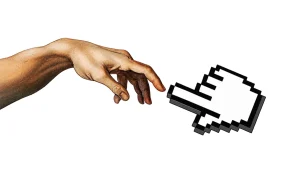
There are tools that use an image, a hash to recognise where it’s uploaded on the web, along with its copies, to erase NCII from digital platforms, but they can have a limitation too.
Hashes can be highly sensitive to changes in an image and moderation systems often have limited tolerance for those variations. Hence, a victim-survivor has to go through the labour of checking for any altered image uploads and use them as hashes again.
Who would be considered a perpetrator after thousands of views and multiple reuploads? Currently the mood is to legislate quickly and aggressively, but how many people are we going to imprison?
There is a larger cultural aspect where consent and control have lost meaning, and then there is a response aspect that appears to move away from the victim’s needs. These gaps become even more significant as online safety risks in India spread across platforms, accounts, and services in ways that are difficult to contain.
So the big question remains unaddressed: Who is responsible for supporting survivors of online harm digitally, culturally, and emotionally?
25 Aug, 2026
― Illustration by Lisett Ledón Digital safety challenges in India are undergoing a rapid shift. Online...Read More